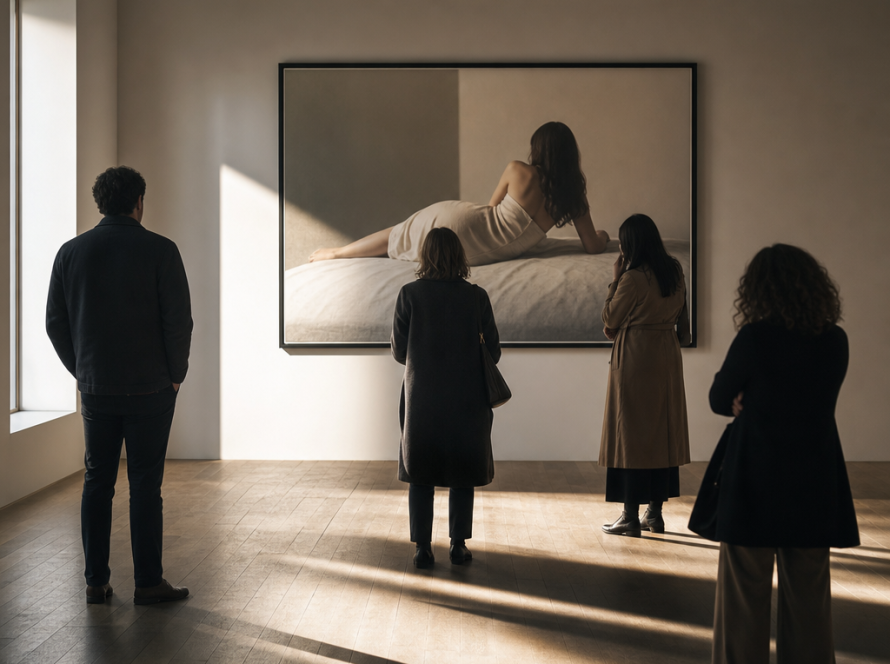
In a quiet gallery, a print titled ‘Ropeburn’ hangs at eye level: two bodies, their edges blurred by graphite and intention, held together yet carefully apart. A few visitors glance, hesitate, then move on, their footsteps more audible here than in front of the landscapes or abstractions. The tension is not in the figures alone, but in the invisible line traced by the viewer’s gaze—hovering, curious, darting away as if the paper itself could blush.There is nothing crude about the image. In fact, its restraint is part of the disturbance: suggestion, not revelation. Yet even among those who admire the composition or whisper about the artist’s hand, a familiar unease surfaces. Eyes flick from the art to the room to their own hands. Why does looking at erotic art—art that neither panders nor preaches, but simply shows desire—invite such a complicated reaction? The discomfort seems out of proportion to what is actually visible. Is it the subject, the context, or the knowledge of being witnessed as a witness?This hesitation is hardly new, yet it feels surprisingly private. The body in art is a site of fascination and vulnerability. Whether the figures are gently entwined or simply revealed, their presence asks something of us. We become the ones exposed, not merely as voyeurs or connoisseurs, but as people with bodies—and all the attendant histories, rules, and desires. What exactly makes us so aware, and so awkward, when we meet erotic art head-on?
Our unease with erotic art is rarely about the subject alone. It is a collision of personal history, cultural codes, desire, and self-consciousness. The experience of looking exposes the viewer as much as the viewed, disrupting the safe distance that art usually provides. Erotic art is not just about sex or nudity—it is about the act of looking, and being caught looking.
We feel uncomfortable with erotic art because it implicates us: it exposes not just bodies, but the ways we look, desire, judge and imagine. This makes the encounter intimate, sometimes vulnerable, and always revealing—whether or not anyone else is watching.
The Culture of Looking and the Erotics of the Gaze
Looking at art is supposed to be a cultivated pleasure—thoughtful, informed, even detached. Erotic art, however, cuts through this choreography. The gaze that rests on a reclining figure or a suggestive gesture is reflexive and aware, sometimes tinged with guilt or anticipation. Unlike other genres, erotic art makes the act of looking part of the drama. It does not let us off the hook.Art history is filled with bodies: the nude Venus in a mythic landscape, the entwined lovers of modern painting, the blunt photographic portrait. Yet when a work is explicitly erotic—even if it is restrained or allusive—the viewer feels their own subjectivity pressed into service. Erotic art asks, sometimes quietly, what it means to look and to want. This is not limited to heterosexual or cisgender experiences; queer and non-normative representations can bring their own sets of codes and recognitions, intensifying or subverting the discomfort but never removing it entirely.
Desire, Shame, and the Inherited Script
The discomfort is rarely just about what is depicted. It is about the inherited scripts we carry. Many people learn early to keep desire private, to distinguish between the “good” gaze of appreciation and the “bad” gaze of lust. Erotic art blurs these boundaries, making it unclear which role we are playing. What if someone notices that you are looking too intently? What if your own reaction is less intellectual than you expected?Paul Muresan’s limited edition print ‘Ropeburn’ is a case in point. The image is not explicit, but it is undeniably intimate—a study in closeness and boundaries. There is an ambiguous push and pull: restraint, tension, the trace of desire. The discomfort comes not from vulgarity, but from the friction between what is seen and what is felt. The art does not tell you how to feel; it leaves you with the consequences of your gaze.
Context and the Social Frame
Where we encounter erotic art matters. In a private home, it may feel like a secret. In a public gallery, it can feel exposed—almost transgressive. The presence of others, the lighting, the institutional frame all color our response. Even online, where anonymity prevails, erotic art can provoke anxiety over what it means to look and be seen looking. The display context is rarely neutral; it is charged with social expectation and personal histories.
It is tempting to imagine that discomfort with erotic art is a sign of repression or prudishness, but the reality is more layered. Some viewers may feel no discomfort at all, or find erotic art exhilarating and freeing. For others, the discomfort is not about the art, but about a legacy of shame, trauma, or exclusion. Not everyone has equal access to desire or comfort with their own body; for some, erotic art opens wounds as much as it opens possibilities.There is also a risk that the very label “erotic” invites reductive interpretation—that the work is only about sex, or that the viewer’s interest is automatically suspect. In truth, the discomfort may stem not from the art’s content, but from the fear of being misunderstood, or of misunderstanding oneself.
To encounter erotic art with less discomfort, it helps to notice what the gaze is doing—both the artist’s and your own. Ask: What am I responding to? Is it the subject, the style, the context, or the awareness of being seen? There is no single right reaction. A considered response may involve curiosity, caution, vulnerability or critique. The discomfort itself can be a productive part of the experience—a sign that the boundaries between art, desire and self-image are not fixed.Artworks like ‘Ropeburn’ invite us not to resolve the tension, but to inhabit it thoughtfully. Erotic art is not a test of taste or morality; it is a mirror, sometimes fogged and sometimes clear, for our complicated relationship with looking and being seen. The next time you find yourself hesitating before a work like this, consider what is really at stake: not just the image, but the human act of seeing—and being unsettled by what you find there.
Back in the gallery, the print still hangs—quiet, unashamed, waiting. The next visitor pauses, studies the figures, then lingers just a moment longer. The tension remains, but so does the invitation: an honest, unguarded look, and the silent admission that sometimes, to see is to feel exposed.