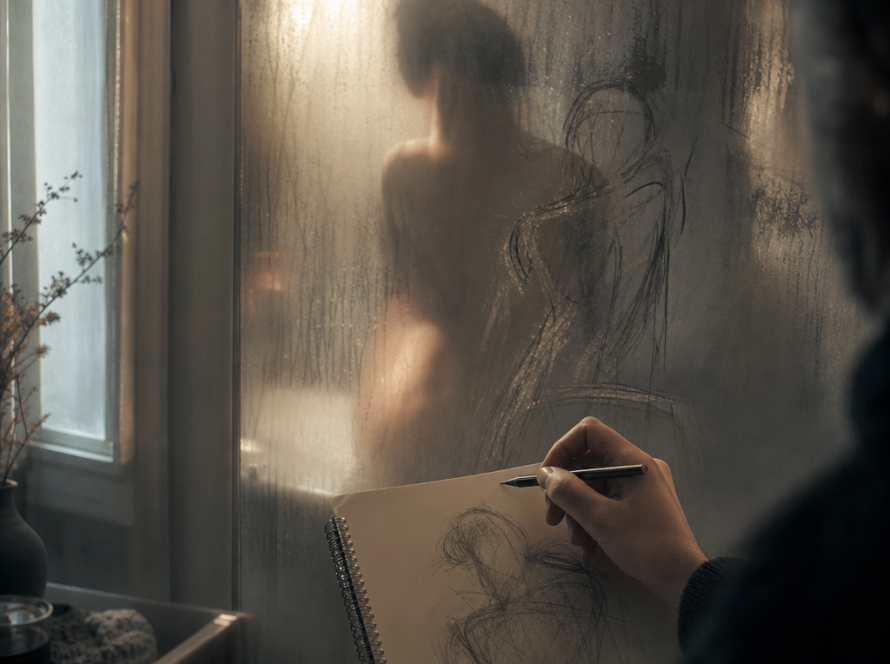
A figure reclines on a crumpled bedsheet, their limbs arranged not for display but for comfort, head turned away from the imagined viewer. The light slants through a half-closed curtain, catching only the curve of a shoulder, the arch of a foot disappearing into shadow. The scene is neither scandalous nor staged, yet the act of looking feels somehow intrusive, as if the painting itself has boundaries that a museum’s velvet rope cannot enforce. The sensation is familiar to anyone who has stood before a work that seems to hum with secrecy—a drawing found in a private sketchbook, a photograph never meant for public eyes, or a sculpture that suggests a gesture rather than completes it. What makes an artwork feel private? The answer is not simply a matter of what is revealed or concealed. Privacy in art is a mood, a contract, sometimes a gentle warning. It is built from more than just subject matter: it entwines setting, gesture, gaze, and even the viewer’s own expectations. This quality can be found in erotic art, but also in depictions of solitude, domestic interiors, or the silent space between two people. The private in art resists translation, operating at a level beneath language—both inviting and withholding, never fully available for possession. We enter not as conquerors, but as guests, aware that the real story lies somewhere just beyond our reach.
Why does privacy matter in art, and why do certain works seem to draw a circle around themselves? The stakes are aesthetic and emotional: what feels private can provoke longing, tenderness or unease, challenging our assumptions about intimacy. In an age of oversharing, privacy in art offers a rare sense of interiority—an invitation to witness without fully knowing, to encounter desire or vulnerability without entitlement.
Some artworks feel private not because of what they show, but because of how they construct distance, ambiguity or secrecy, inviting the viewer to sense the limits of their access.
The Architecture of Privacy: Space, Light and Distance
Privacy in art is rarely achieved through explicit barriers alone. Consider the use of interiors: a closed door, a drawn curtain, a window just out of reach. These devices do not simply hide; they filter the viewer’s gaze, implying that the scene continues beyond what is visible. In paintings and photographs alike, the manipulation of space and light can create thresholds that the eye cannot cross. A figure facing away, or partially obscured by a shadow or an everyday object, signals the presence of an inner life, one that the viewer is not fully permitted to access.
Gesture and the Unfinished Story
Privacy is also a matter of gesture and posture. A hand loosely draped, a face turned inwards, a body at rest in a moment of unguarded stillness—these choices resist spectacle. The subject is not offering themselves to the viewer, but simply existing, unaware or unconcerned with observation. This is evident in works like Ioana Iacob’s No tan lines, where the ordinary is elevated through a sense of being seen at a distance, or perhaps not meant to be seen at all. The effect is neither cold nor indifferent, but suffused with the quiet intensity of the unspoken.
Mediums of Secrecy: Drawing, Photography, Painting
Some mediums seem to lend themselves more readily to the private. Drawings in particular often retain the intimacy of the artist’s original impulse, their scale and fragility reinforcing the sense that we are glimpsing something not quite finished, not yet public. Polaroids and sketchbooks can possess a similar aura, partly because of their origins in personal ritual or everyday life. Even large-scale paintings can evoke privacy through choices of subject matter and composition: the bath, the bedroom, the introspective portrait. These settings are coded as private, but it is the mood—hesitant, unfinished, or gently self-contained—that completes the effect.
Not every scene of solitude or intimacy becomes private in the viewer’s experience. Sometimes an overt attempt at secrecy can feel performative, even exhibitionist. The line between privacy and voyeurism is easily crossed, especially in erotic art. When the construction of privacy becomes too conspicuous, the result is artifice rather than genuine interiority. There is also a risk in assuming that privacy is a universal or stable category—what feels private in one culture or era may be entirely public in another. The sense of privacy is as much a product of the viewer’s own habits, taboos and fantasies as it is of the artist’s intention.
To sense privacy in art, look beyond the obvious markers of nudity or concealment. Attend to the atmosphere: the way a body is situated in space, the interplay of light and shadow, the moments of interruption or unfinished gesture. Notice how the artwork’s mood resists easy consumption, offering an experience of looking that is both tender and uncertain. When collecting or displaying such works, consider the context in which they are shown—sometimes a piece that feels private in a quiet room loses its aura in a crowded gallery. Subtlety, scale and setting all play a role in sustaining the internal world the artwork protects.
The curtain falls back into place, the bedsheet cools. What remains is not simply an image, but a residue of presence—an intimation that the artwork, like its subject, retains secrets even as it allows itself to be seen.