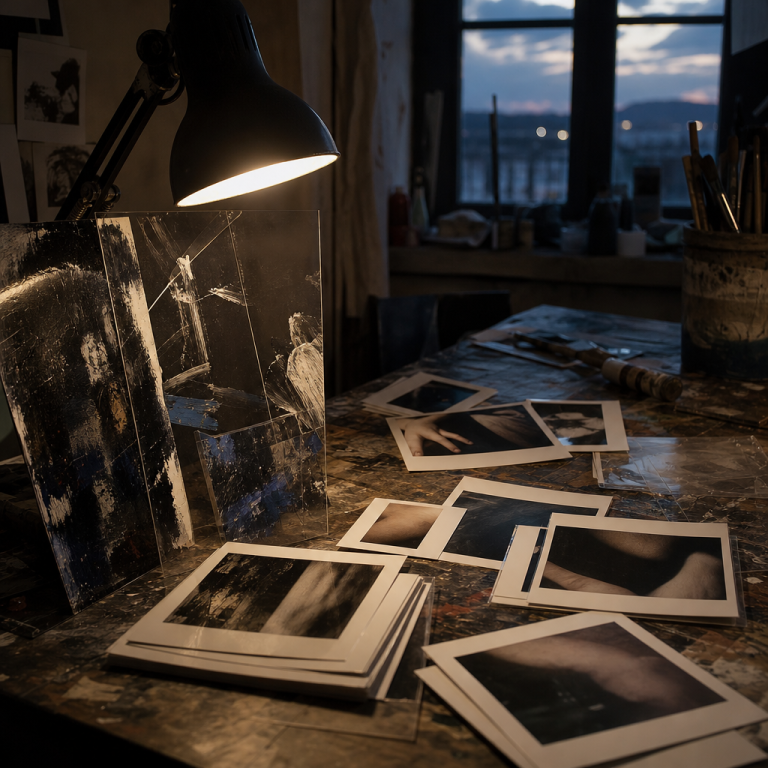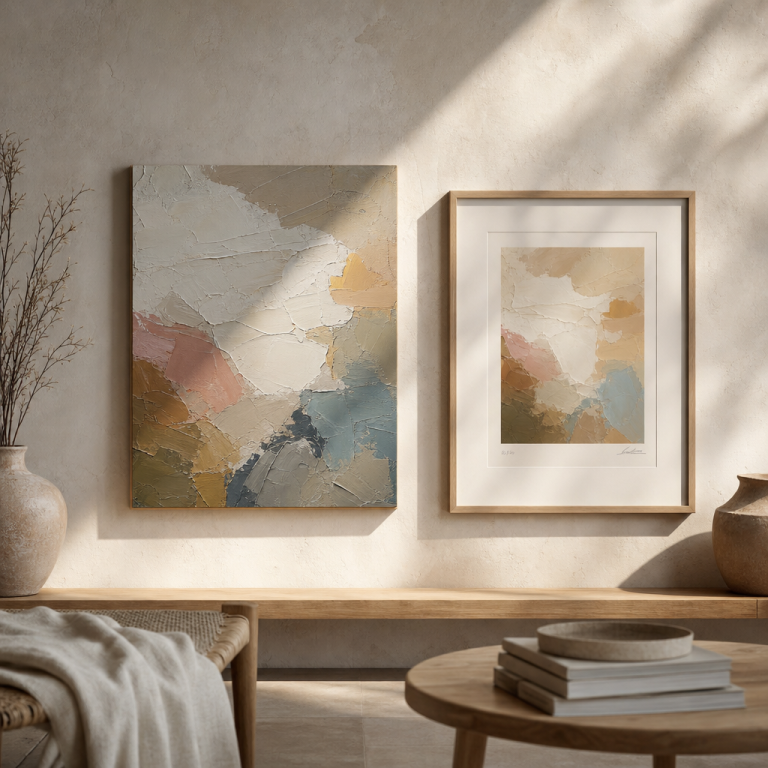

There is a particular hush to a room at dusk, a space where the light seems to rest softly on a single painting. On the wall, a canvas shows not a dramatic scene, but a quiet interior: a glass of water, a hint of skin, a half-open curtain reflected in a mirror. The rest of the room is ordinary—chairs, a shelf, a stack of letters—but the artwork hums with a charge that seems almost secret, as if it holds a memory. The sense of intimacy in the space does not come only from the art’s subject, nor from its colors alone, but from something less visible: the gentle trespass of gaze, the way the painting seems to fold the room into itself. Guests lower their voices in its presence. The owner, perhaps, has chosen this work for the way it unsettles the distinction between private and shared, for the way it quietly asks the viewer to come closer.What is it about a particular artwork that can make a space feel more intimate? Not every nude, not every amorous sketch, and certainly not every soft pastel achieves this effect. Sometimes an abstract composition or a fragment of everyday life—a shoe, a shadow, a forgotten book—can suffuse a room with intimacy more acutely than a direct depiction of lovers. The relationship between art and the feeling of intimacy in a space is not simply a matter of content, but of atmosphere, suggestion and placement. This article asks how, and why, artworks can transform the texture of a room, and what we are really seeking when we choose art to make a space our own.
We often imagine intimacy as an emotion exchanged between people, but spaces, too, can become charged with it. The artworks we select—whether openly erotic, quietly figurative, or cryptically abstract—do not simply decorate; they change the way a room is perceived and used. The question of intimacy in art is less about explicitness and more about presence, vulnerability and the sense of something withheld or shared.Art makes a space feel more intimate not just by what it shows, but by how it invites us to look and linger, cultivating a private atmosphere even in a shared room.
Atmosphere Beyond the Explicit
When considering art’s influence on intimacy, the mind may leap to images of the nude or the erotic. Yet, as any collector or attentive guest knows, it is often the subtle gesture, the unresolved gaze, or the tender ambiguity of a scene that transforms a room’s feeling. A painting of a couple by the pool may evoke more intimacy through the suggestion of touch or the way the figures turn slightly away from the viewer than by any overt display. The interplay between what is visible and what is concealed is where intimacy begins to breathe.
Objects, Placement and the Ritual of Looking
Intimacy is not inherent in the artwork alone; it emerges in the relationship between art, space and viewer. A drawing left unframed on a nightstand, a photograph propped casually against a stack of books, or a sculpture placed on a low shelf—each of these gestures changes our engagement. The very act of displaying art in a bedroom or a bathroom (rather than a living room or hallway) suggests a willingness to incorporate private meaning into daily routine. Rooms become more than functional; they become sites of reverie, daydream and subtle provocation.
When Intimacy is a Matter of Reflection
Some artworks play with intimacy as a mirrored, doubled or refracted experience. Ioana Iacob’s ‘Composition with Orchids’ offers a layered view: a painted reflection, a floral motif, and a sense of observation that is both candid and withheld. This kind of visual structure does not simply depict intimacy, but stages it—inviting the viewer to both witness and participate in a private moment. The result is a room that feels less like a public display and more like an invitation into a secret conversation.
The Private Life of Display
The desire for intimacy in interiors is not new; it echoes the centuries-old practice of keeping certain artworks in boudoirs, studies or cabinets of curiosity. Today, the question is not only what we display, but how and why. For a deeper exploration of this ritual, the essay on art we display and art we hide traces the complex dance between public taste and private longing, revealing how even the act of hiding or revealing a work contributes to a room’s emotional temperature.
Intimacy can easily slip into cliché, or even self-consciousness, if approached clumsily. A room crowded with obviously suggestive art can feel staged or uncomfortable, undermining the very privacy it seeks to create. Likewise, an artwork that feels voyeuristic rather than inviting can disrupt a sense of welcome. The pursuit of intimacy in interiors is therefore not a formula, but a negotiation—a balance between revelation and restraint, between the personal and the performative. The risk is not in art’s ability to make a space intimate, but in our own expectations: when does intimacy become affectation, and when does it genuinely transform a room’s mood?
For those seeking to make a space feel more intimate through art, the most fruitful approach is to consider not only subject but also scale, placement and the quality of attention the artwork demands. A single evocative piece, carefully chosen for its atmosphere rather than its obviousness, can alter the entire tenor of a room. Letting an artwork inhabit a personal nook, or allowing it to be discovered rather than announced, encourages a slower, more attentive kind of looking. In this sense, intimacy is less a property of the artwork and more a relationship formed over time—between viewer, object and the quiet rituals of everyday life.
As dusk shifts in the room and the last light catches a painted reflection, intimacy lingers—never fully owned, but always sensed in the hush between art and observer. The space, once ordinary, now carries the memory of a glance, a gesture, a secret half-revealed.