


A figure stands in the half-light of a studio, back turned, skin rendered in subtle graphite or luminous oil, caught between vulnerability and poise. The studio is quiet but charged: a pair of slippers on the floor, the faint scent of turpentine, a discarded robe. The artist’s gaze—sometimes that of an outsider, sometimes of a lover, sometimes of the subject themself—meets the unclothed body not as an object to be solved, but as an endless question. In a digital age saturated by images, the sight of an unclothed figure still startles, whether in a centuries-old marble, a candid photograph or a scribbled contemporary sketch. Why do artists still return, again and again, to the nude—when the motif could so easily have slipped into cliché, or lost its power to surprise? The nude is not a single idea but a shifting territory. In an exhibition, a museum, or a private home, it can be devotional, anatomical, erotic, satirical, idealising, defiant or simply unguarded. The surface is familiar. The meanings are not. Whether we are looking at a Renaissance Venus, a modernist distortion, or the pixelated surface of a smartphone screen, the unclothed body remains an invitation—at once personal and cultural. The persistent return of the nude says as much about the anxieties and desires of each era as about the artists themselves. This enduring subject is less a tradition and more a living conversation, one that refuses closure. The scene is never quite the same twice.
The stakes of the nude in art are not only aesthetic but emotional and social. Its presence provokes questions about beauty and shame, privacy and spectacle, the difference between intimacy and display. While some see the nude as a worn-out academic exercise, others find in it an inexhaustible resource for reimagining the body and testing the boundaries of seeing. This is not a matter of tradition alone, but of ongoing negotiation: what counts as art, what offends, what excites, what belongs in a gallery or a bedroom?
The nude persists not out of habit, but because it continually renews the questions of what it means to look, to be seen, and to be human in one’s own skin.
Looking Back: The Nude as Ideal and Problem
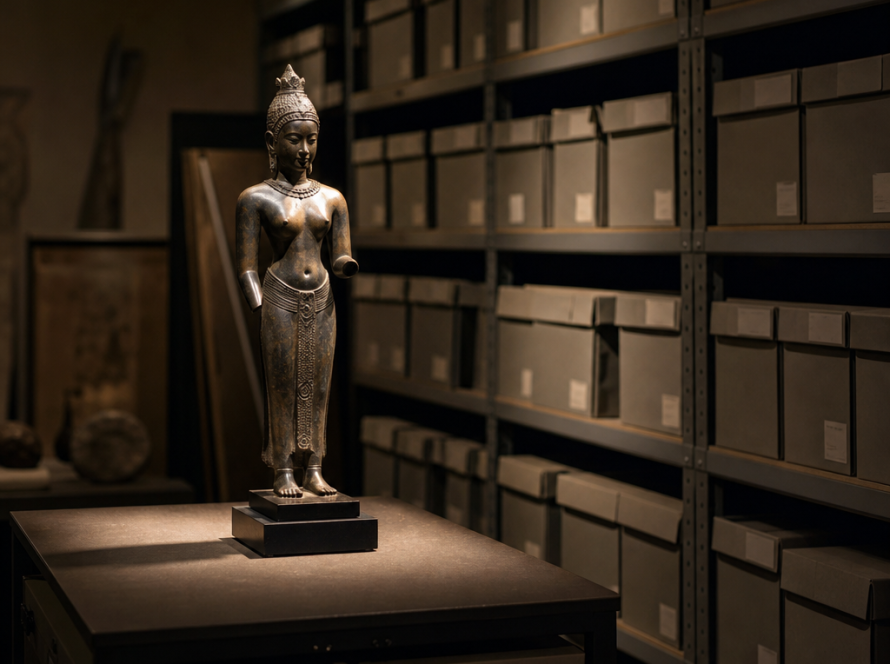
The earliest surviving nudes in art are not uniform in their meanings. Classical Greek statues celebrate athletic bodies as ideals, intertwining the divine with the human. Meanwhile, Indian temple sculptures and ancient fertility figures offer bodies that are voluptuous, stylised or enigmatic—each form carrying spiritual, social or erotic significance. Far from a universal language, the nude has always been shaped by culture and context. In the European tradition, the academic nude emerged as a test of skill and a symbol of artistic legitimacy, its conventions codified in life-drawing studios and art academies. Yet even within these settings, the unclothed body was contested territory, at times revered, at times viewed with suspicion or even outright censorship.
Modernity and the Fractured Gaze
With the 19th and 20th centuries, artists began to question—and often disrupt—the inherited codes of the nude. The Impressionists painted their models in everyday settings, refusing the mythological alibi. Modernists fractured, distorted or abstracted the body, using the nude as a site for formal experimentation rather than idealisation. The camera brought an entirely new dynamic: the possibility of capturing, with unnerving realism, the details of skin and posture previously left to the artist’s interpretation. As photography, and later digital images, multiplied, so too did the questions around permission, collaboration and power.
The Digital Nude and Contemporary Questions
Despite predictions of exhaustion, the nude remains a live subject. Today’s artists work within a landscape shaped by social media, privacy anxiety and shifting ideas of gender and identity. The unclothed body, now more easily broadcast and archived than ever, becomes the site for new negotiations about autonomy, vulnerability and desire. Some artists embrace the documentary possibilities of digital photography, such as Peter Adams, whose “The Digital Female Nude” compiles images that are both direct and ambiguous, playing with the boundary between exposure and concealment. Others revisit drawing and painting precisely because these media slow down the act of looking, restoring deliberation to what can otherwise feel like a fleeting or consumable image.
Variations: Far Beyond the Classical
Not every nude is a Venus or an Adonis. Artists have explored the body aged, scarred, awkward, joyful, alone or in company. The genre’s boundaries are porous: is a bent back in a Lucian Freud painting erotic or medical, a statement of mortality, or all of these at once? The nude can be a ground for activism, for tenderness, for humor, for confrontation, for self-recognition. The recurring motif is less about surface than about process: the repeated act of translating the vulnerability of the unclothed body into a visible form that resists closure or easy answers.
Yet the persistence of the nude is not without its contradictions. For every artist who approaches the body with care, others have rendered it formulaic, exploitative, or inattentive to the personhood of the subject. The very act of looking is fraught: when does artistic study become voyeurism, or documentation become surveillance? Contemporary anxieties about consent, representation and power do not negate the value of the nude, but they do complicate its legacies. Not every viewer will see the same image as liberating, intimate or respectful. The history of the nude is filled with contested meanings, and no single artwork—or era—can claim to settle them.
To look at a nude in art is to enter a conversation about seeing and being seen. For the collector or viewer, the challenge is not to solve the image but to engage with its layers. Ask: does this artwork invite empathy, curiosity, or critical thinking? Does it flatten the subject or open a space for reflection? The best nudes—whether in classical sculpture, digital photography or contemporary drawing—do not simply repeat old motifs, but reframe the body as a site of ongoing tension and possibility. The next time you encounter a nude, notice how the artist has negotiated exposure and reticence, surface and substance, tradition and reinvention.
In the quiet of the studio, the model shifts their weight ever so slightly, the artist’s pencil hovers, the light changes. The nude remains—a fleeting moment of presence, as unresolved and compelling as ever.

1 Comment
Comments are closed.