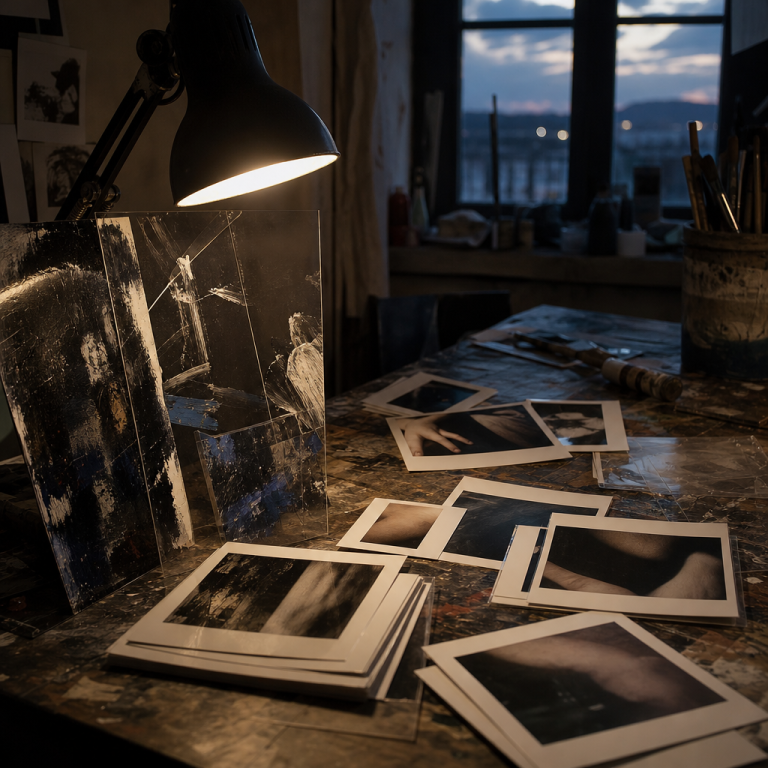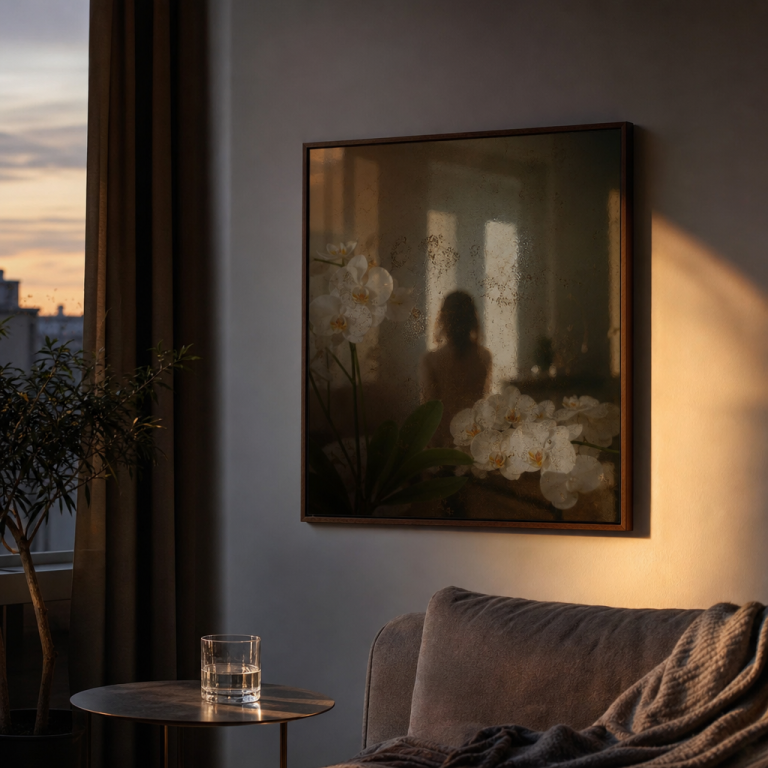

In a quiet living room, sunlight slants across a wall where two artworks hang: one a small, textured canvas, its paint layered and alive, the other a photographic print, numbered discreetly at the corner. The canvas is singular. The print, while striking, belongs to a family—one of twenty, perhaps. Guests pause, sometimes asking, “Which is the original?” or “Is this a real artwork?” The answers are rarely as simple as the questions. The original and the edition do not compete so much as coexist, each carrying a distinct sense of presence and intimacy.
The tension between these objects is not superficial. To live with an original painting or drawing is to share space with the unique evidence of an artist’s gesture, their hand quite literally visible in every brushstroke or mark. A limited edition print, on the other hand, offers its own quiet authority: a carefully controlled reproduction, signed, often numbered, sometimes more accessible, sometimes just as rare. The dilemma is more nuanced than a question of ‘real’ versus ‘copy.’ Rather, it is a decision about what kind of relationship—physical, conceptual, emotional—you wish to have with the art that enters your home. The answer will shape not only the mood of your walls, but also the rituals of looking, collecting and, perhaps, desire itself.
The original-versus-edition debate is rarely just about value or status. It is about how we understand authenticity and intimacy today. For private collectors, the choice reflects not only taste but also a philosophy of living: do you want to be the sole keeper of an object’s history, or part of a small, intentional community, each person holding a piece of the same vision?
Choosing between an original and a limited edition print is ultimately about deciding what kind of presence, story and intimacy you want to invite into your space. Both can be meaningful, but their impact on your daily rituals and sense of connection with art is subtly, and sometimes profoundly, different.
The Allure of the Original
Original art, whether painting, drawing, or mixed media, is defined by its singularity. It is the site of the artist’s initial encounter with materials—a surface where uncertainty, revision and decision are preserved. Living with an original means that each mark, each imperfection, is unrepeatable. For many, this is the ultimate form of intimacy: the sense that the artwork was not only made by a hand, but that it remains irreplaceably itself.
Originals also carry certain practical considerations. They are often more fragile, requiring careful placement and climate control. They are usually more expensive, sometimes requiring a longer commitment—financially and emotionally. For some collectors, these constraints are what make owning an original feel meaningful; they reinforce the sense of stewardship and singularity.
The Case for Limited Edition Prints
Limited edition prints, whether photographic, digital, or traditional, occupy a different but no less valuable space in collecting. They are not mass-produced posters, but carefully executed multiples, often made in close collaboration with the artist. Each print is signed, numbered, and produced in a predetermined quantity, preserving a measure of rarity while allowing more people to participate in the work’s story.
Consider Chris Devour’s « Encounters 2 » limited edition print: not only does it offer access to an evocative and technically exacting image, but its edition size and artist’s signature secure its status as a collectible art object. The print carries with it the artist’s intention and an authenticity of a different kind—the authenticity of process, control and shared experience across multiple owners.
Value, Aura and Experience
The language of value—financial, emotional, social—often clouds the conversation. Originals may appreciate over time, but so can editions, especially when the artist’s career develops or the edition sells out. But “aura,” as Walter Benjamin once described it, is not solely the domain of originals. A limited edition print, thoughtfully made, retains a tangible sense of the artist’s vision and the deliberate act of making. The materiality of a well-printed photograph or lithograph can be deeply moving, especially when chosen, framed and displayed with care.
Previous Perspectives
The practicalities and psychological nuances of acquiring erotic or intimate art are explored further in a recent LustNotLost guide to buying art online. That article considers privacy, taste and the collector’s journey, and is a useful complement to the complexities encountered here.
It is easy to romanticize the original and overlook the possibilities offered by the edition—or to dismiss editions as lesser simply because they are not unique. Yet the line between original and print is increasingly porous; many contemporary artists produce works in both forms, while some works—such as photographs or digital illustrations—are conceived from the start as editions. Conversely, an original can be less compelling than a thoughtfully crafted print if the latter better encapsulates the artist’s vision.
There is also an ethical dimension to consider: editions can democratize collecting, allowing more people to experience meaningful art without the financial or psychological barrier of owning a one-of-a-kind. But this accessibility can itself be misread as dilution, when in fact it may foster a richer, more complex network of connection between artist, collector and artwork.
Begin by asking yourself not only what you wish to display, but how you wish to live with it. Examine the physical qualities: does the surface pull you in? Is the scale right for your space? For originals, scrutinize condition and provenance. For editions, look for clarity about the process, the edition size, and the artist’s involvement. A well-chosen edition, such as Chris Devour’s « Encounters 2, » can bring the same sense of intimacy and contemplation as an original painting—a presence that is both personal and quietly communal. Allow criteria beyond rarity to shape your choices: resonance, narrative, materiality, and the daily experience of the work matter far more than abstract notions of status or investment.
Returning to that wall in the living room, the original and the edition no longer appear as rivals. Instead, their dialogue animates the space—a conversation about touch, process, and the ways we choose to inhabit art. The most meaningful collections are built from such dialogues, not just from objects but from the relationships they enable and sustain.