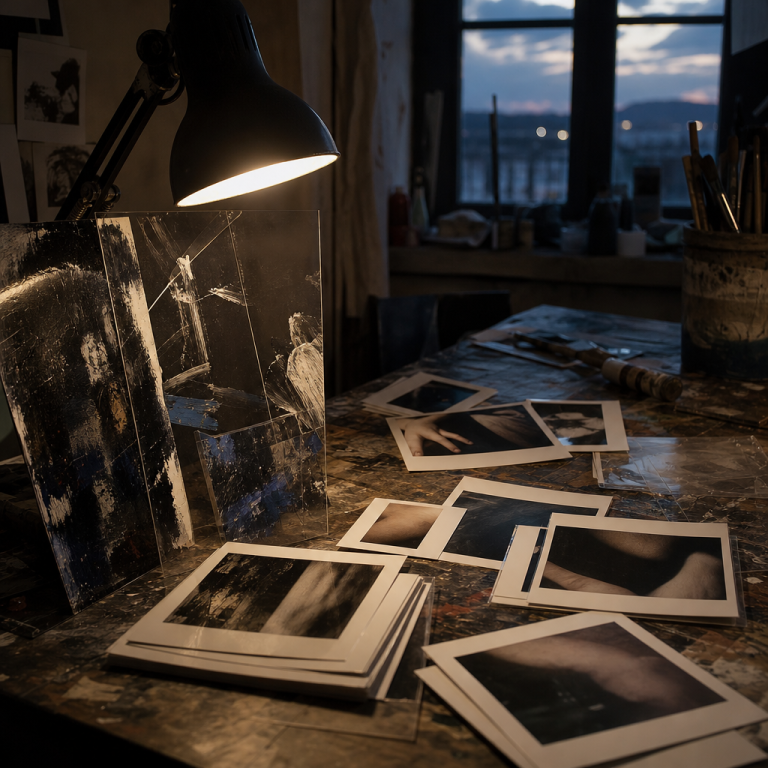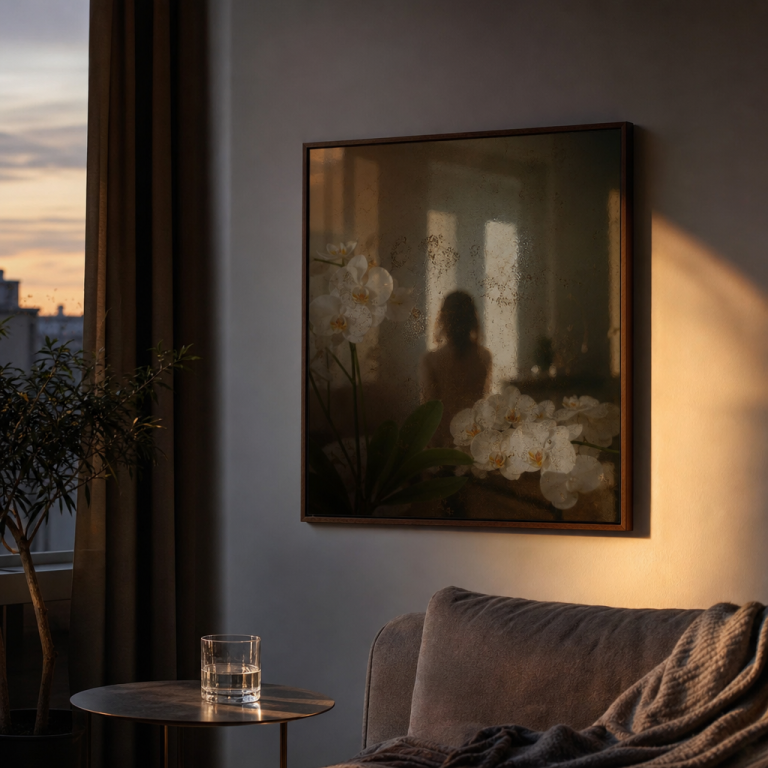

The door to a bedroom stands ajar. On the far wall, in the gentle spill of evening light, hangs a drawing: two figures in ambiguous proximity, their bodies rendered with a delicacy that discourages voyeurism but encourages attention. It is neither a centrepiece for public conversation nor a secret to be entirely concealed. Instead, it occupies a liminal space—visible only to those invited past the threshold. This is not a matter of prudery or mere discretion. Rather, it is a question of intimacy, of how certain artworks—by subject, mood or tone—seem to belong to rooms where our guard drops, where the act of looking is private and unhurried.There is a longstanding but often unspoken tradition of placing art in the spaces where we undress, sleep, bathe or dream. It is in these rooms, behind doors that close, that the boundary between the personal and the public becomes sharply drawn. Some works demand this privacy: not because they are scandalous, but because the experience they offer is made for a quieter kind of attention. The living room, with its performance of taste, can feel inhospitable to images that suggest vulnerability or desire. In contrast, the private room welcomes what is unguarded, ambiguous, and tender. Why do certain pictures only make sense here? What does it mean to curate intimacy within our own four walls?
Where we choose to place art is rarely a neutral decision. Bedrooms and bathrooms, dressing rooms and studies—these are the sites where our aesthetic choices are most closely entwined with our inner lives. The private room is not only a container for secrets, but a crucible for reflection. Placing art here is less about hiding than about creating space for unfiltered attention, for the quiet dialogue between viewer and image that public rooms rarely allow.Some art belongs in private rooms because it needs the cover of intimacy to reveal its meaning, and because private viewing transforms the work from spectacle to confidant.
The Architecture of Looking
Art in public spaces—corridors, salons, the dining table wall—tends to perform. It is subject to the gaze of visitors, to the ongoing negotiation of shared taste and social acceptability. The choice of what to display here is shaped as much by external expectations as by private inclination. Art for the private room, by contrast, is liberated from these negotiations. Its presence is not an announcement but an invitation: to contemplation, to fantasy, to memory.Bedrooms, especially, are sites of transition between states—wakefulness and sleep, solitude and togetherness. The art we hang here is often selected not for its immediate legibility, but for its capacity to accompany us through these liminal moments. Erotic drawings, melancholic photographs, enigmatic still lifes: their meanings are not fixed, but fluctuating, dependent on our own shifting moods and states of undress.
Intimacy as a Curatorial Principle
It is tempting to think of intimacy as a quality of the artwork itself, but in practice, it is constructed through context. A drawing of a body, for example, can seem bracingly direct in a hallway but quietly reassuring when glimpsed upon waking. Ioana Iacob’s ‘No tan lines’ captures this dynamic: a scene at once ordinary and charged, private yet open to interpretation. It is less an invitation to exhibitionism than to personal reverie. The effect is cumulative, shaped by the room, the time of day, the rituals of the inhabitant.
Between Display and Secrecy
The choice to place certain works in private rooms is sometimes mistaken for shame or censorship. Yet often it is a gesture of respect: for the work, for the viewer, for the porousness of domestic boundaries. Private rooms become sites of permission, where art is experienced in the register of the everyday, filtered through the slow accretions of habit. The artwork in the bathroom mirror, glimpsed during acts of care, becomes entwined with our sense of self, its imagery folded into our own rituals of exposure and concealment.For a nuanced exploration of these boundaries, see the essay on what governs our choice to display or hide art.
There is, however, a tension inherent in the notion of privacy. What feels intimate to one person may feel awkward or isolating to another. A work chosen for its subtlety in a private room may, over time, become invisible through familiarity, or conversely, disquieting in its constancy. The line between comfort and discomfort is not fixed. Moreover, the rise of social media has blurred the boundaries of private and public display—what was once reserved for the bedroom wall may now circulate as a digital image, stripped of its context and discretion. The private room’s shelter is both a gift and a limitation: it protects, but it can also obscure.
To understand whether an artwork belongs in a private room, begin by considering the kind of attention it asks for. Does it reward slow looking, or demand repeated encounters? Does it echo the rituals of your daily life, or introduce dissonance in a way that feels generative rather than jarring? Above all, does its presence feel like a conversation, not a performance? These criteria are not universal, but they are concrete. The most meaningful private collections are not assembled by rule but by honest self-observation. In choosing what to hang where, allow yourself the luxury of ambiguity, and of art that resists being explained at a glance.
When the door closes, the drawing remains. Its meaning is neither secret nor entirely shared. It becomes, for a while, part of the air you breathe in the quietest part of the house—a companion, not a revelation.