
In the hushed room of a museum, an oil painting quietly reveals a reclining body, skin rendered luminous by the artist’s hand. There is no warning label. No pixelation, no blurred patch, no algorithmic censor stands between the viewer and this intimate vision. A few blocks away, the same image—if posted online—would likely vanish into the void, flagged and deleted within hours, its contours deemed too suggestive for algorithmic eyes. A contradiction emerges: in one setting, the artwork is heritage, protected by curators and seen by school groups; in the other, it is an obscenity, erased without the possibility of appeal. For all the talk of democratizing art, the digital commons often feels more restricted than the velvet-rope museum. The line between permissible and prohibited does not depend on the image alone, but on the context, the institution, and who holds the power to define visibility. Museums, with their echoing corridors and carefully worded wall texts, retain a trust that digital platforms cannot replicate. What does it mean that the nude, the kiss, the ambiguous gesture, can hang in a gilded frame but not circulate freely online? Who decides which bodies are too much, which moments too charged, and on what grounds? The tension between museum and platform is not just about taste or prudery—it is a live experiment in visibility, authority, and control.
The question of why museums can show what social media removes matters because it reveals the silent negotiations of power behind every act of looking. The difference is not merely institutional but structural: it is about who sets the rules, how they are enforced, and what is at stake when images of the body, desire, or intimacy traverse from the cloistered gallery to the borderless feed.Museums and social media operate according to fundamentally different logics of trust, risk, and authority—one privileges context and interpretation, the other automation and liability.
Museum Walls as Sanctuary
What is permitted in a museum is not simply a matter of taste or tradition. Museums shape context, offering framing devices—literally and figuratively—that turn an image into an object of study, history, or beauty. A nude sculpture in a marble hall is buffered by centuries of discourse, catalogued provenance, and institutional trust. Visitors expect to encounter ambiguity, discomfort, or desire, and are guided by wall texts or staff, not pop-up warnings or content flags. The museum’s authority is built on slow, collective processes: curatorial selection, public funding, community debate. The stakes are visible and negotiated in public.
The Platform’s Algorithmic Eye
In contrast, social media platforms outsource judgment to algorithms and anonymous moderators. The scale is immense and impersonal. Policies are written to avoid risk: to appease advertisers, to comply with the strictest legal environments, to minimize scandal or protest. Here, the same image—an embracing couple, a vulnerable pose—might be flagged as adult content, regardless of its artistic or documentary intent. The logic is precautionary, not interpretive. Context collapses: a photograph of a breast, whether art, activism, or family snapshot, is just data to be scanned and filtered.
Intimacy in the Shadows
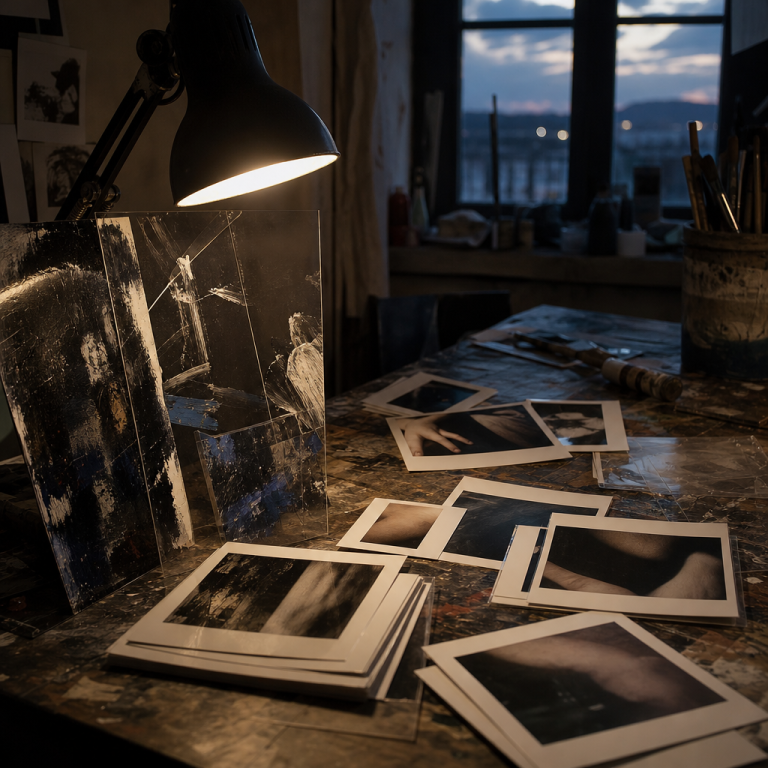
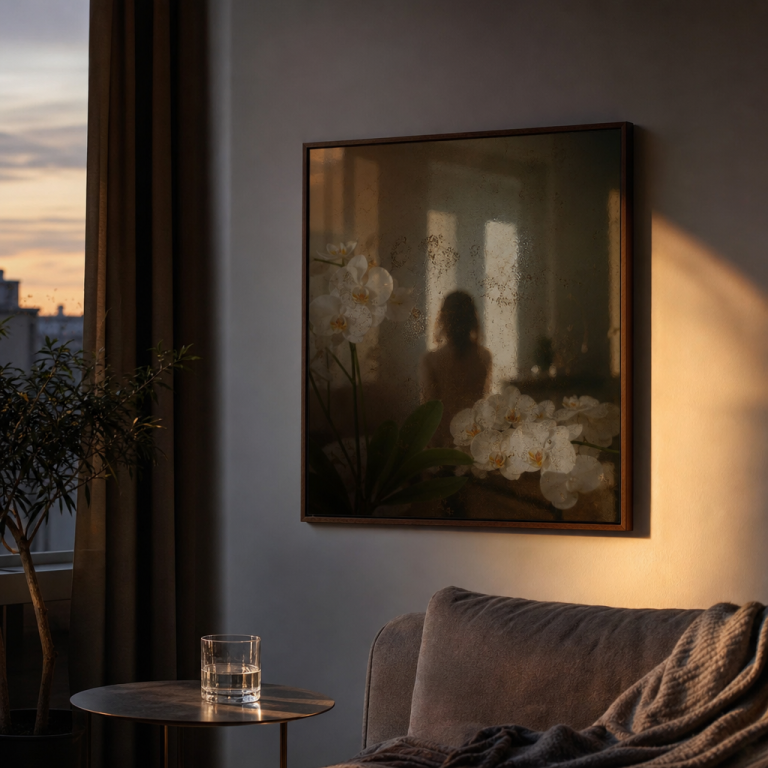
The result is a new form of private censorship. Many contemporary artists, especially those working with the body, intimacy or queer desire, find themselves excluded from digital visibility. The museum becomes a rare sanctuary for work that cannot circulate elsewhere. Ioana Iacob’s ‘Skin tones’, for example, explores moments of intimacy with a voyeuristic lens—charged, ambiguous, and precisely the kind of image that platforms routinely remove or suppress. Yet in the setting of a gallery or on the walls of an institution, these works gain a legitimacy and protection that the open feed cannot guarantee.
There is an uncomfortable irony in this arrangement. The museum’s privilege to show what platforms erase is not equally distributed. It is a product of institutional power and the historic insulation of the art world from everyday scrutiny. Not all bodies or desires are equally protected: what is acceptable in the Louvre or Tate may still be deemed too much in a smaller venue, a classroom, or for a broader public. Museums themselves have histories of exclusion, of deciding whose images and narratives deserve to be seen. The museum is not an unambiguous haven, but a space shaped by its own politics and gatekeeping.
Recognizing these differences sharpens our awareness of how images are policed, not only by platforms but by the institutions we trust. Next time you stand before a painting or photograph in a museum, notice not just the image but the scaffolding that supports its visibility: the framing, the label, the history, the trust. The contrast with social media is not inevitable but constructed. If visibility is a privilege, then the question is not only what we are allowed to see, but who decides, and whose interests are served. Artists, collectors and viewers can push for more nuanced contexts online, but must also be vigilant about the hierarchies embedded in even the most open-seeming spaces.
Back in the museum, the room is quiet. The body remains on the wall, visible, unhurried, surrounded by the weight of interpretation and care—a reminder that visibility is never neutral, and erasure is rarely accidental.