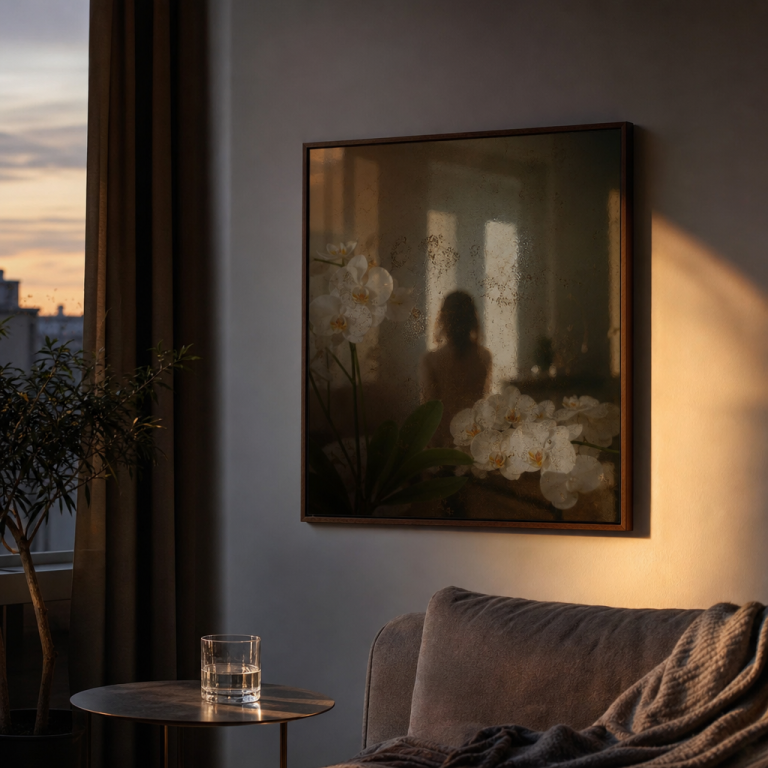

A thin curtain, almost translucent, hangs between two rooms. Behind it, the outline of a figure shifts—a shoulder rendered in soft graphite, a wrist curling with the suggestion of intent. The fabric catches the light, blurring edges and making the body behind it both present and elusive. This is the space where seduction operates: not in what is shown, but in what is withheld. On the other side of the threshold, an abrupt flash of neon, a hard angle, a composition that seems to demand rather than invite. The body here is not a mystery, but a declaration. In the visual arts, seduction and shock frequently inhabit the same gallery, sometimes the same frame, yet their effects diverge. One draws you closer, asking for complicity; the other repels or arrests, commanding attention through rupture. The line between them is as narrow and permeable as that curtain—visible, yet always shifting with the light. Today, as images proliferate and boundaries between the private and the public dissolve, the difference between seduction and shock is not a matter of explicitness but of approach, intention, and, above all, the relationship between artwork and viewer. What, then, is the true distinction between being drawn in and being startled?
To dismiss seduction and shock as opposites is to oversimplify their roles in erotic art. Both can provoke, but their methods and consequences are distinct. While seduction unfolds slowly, drawing the viewer into a web of desire and ambiguity, shock works through rupture—disrupting comfort, forcing a reaction that can be visceral, intellectual, or defensive.
In essence: Seduction invites engagement and imagination, while shock confronts the viewer directly, demanding an immediate and often involuntary response. The tension between the two shapes how erotic art is received, remembered, and valued.
The Composition of Desire: Framing as Invitation
Seduction in art is rarely loud. It is in the angle of a neck, the tension of fingers paused mid-gesture, the play of light that exposes just enough to ignite curiosity. In Maria Brudașcă’s ‘Entangled’, the figures are caught in a suspended moment, each line a suggestion rather than a proclamation. The delicate interlacing of bodies and space becomes a choreography of approach and retreat—a visual analogue to the slow build of anticipation. The viewer is invited to inhabit the gaps, to complete the scene through their own longing or memory. Seduction, then, is a matter of pacing and restraint, of knowing how much to reveal and when to stop.
Shock as Rupture: The Abrupt and the Unavoidable
By contrast, shock in erotic art rarely asks permission. It is present in the jarring juxtaposition of materials, the unflinching gaze, the deliberate breach of decorum. A photograph that thrusts the body into harsh light, a sculpture that exaggerates or distorts—these works confront the viewer, sometimes bypassing desire altogether to provoke discomfort, awe, or indignation. Shock can serve as a wake-up call, shattering complacency or exposing what remains unspoken. But where seduction courts the slow burn, shock is the strike of a match.
Surface, Gesture, and the Rhythm of Looking
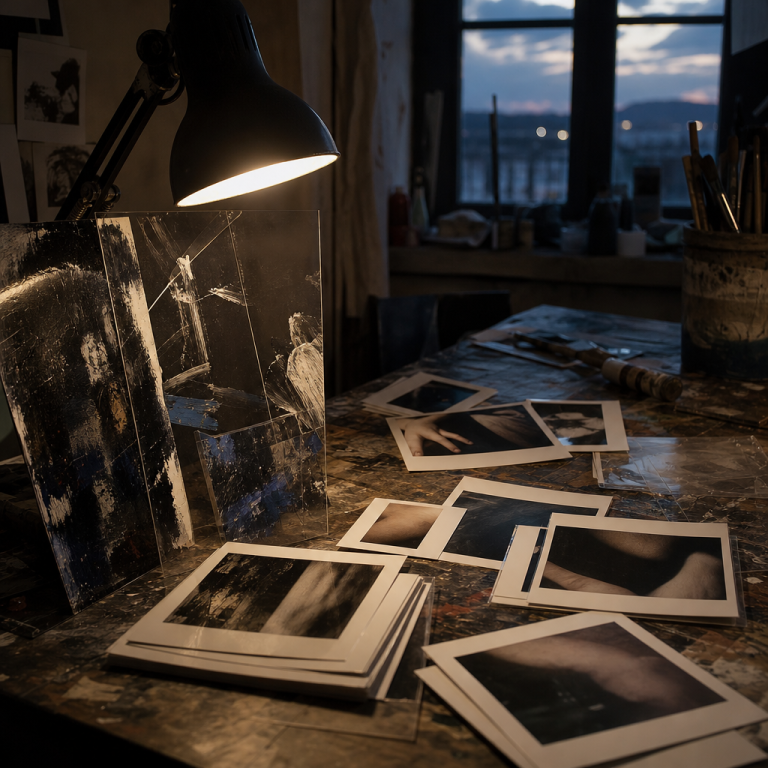
Surface matters. The texture of paper, the grain of photographic film, the rhythm of line in a drawing—all communicate whether a work wants to be caressed by the eye or confronted in a single, bracing glance. Gestures, too, play a central role: a hand lingering at a threshold, a mouth half-open in suggestion rather than declaration. The seduction of a work often lies not in what it shows, but in what it withholds, while shock dispenses with subtlety, insisting on its own presence. The difference is less about content than about the choreography of looking.
The Viewer’s Role: Complicity or Resistance
Ultimately, the distinction between seduction and shock is not inherent in the artwork alone. It is forged in the encounter with the viewer. Seduction asks for complicity, an act of slow participation; shock produces resistance or surrender, but rarely leaves room for ambiguity. The most enduring erotic works often blur the two, offering a surface that entices, then destabilizes, or vice versa. As explored in the debate between erotic art and pornography, the difference is rarely a matter of explicitness. It is a question of how the work shapes our looking and what it asks us to risk.
If seduction and shock seem distinct, the boundary is often more porous than critics or viewers admit. A seductive image can become shocking in a new context; a shocking work can, over time, lose its initial sting and reveal layers of nuance. Cultural background, personal history, and even the setting of a work—a bedroom, a gallery, a phone screen—can tip the balance from allure to affront or vice versa. There is also the risk that works relying on shock alone can become exhausting, numbing the viewer to any deeper resonance, just as works that rely solely on seduction may never move beyond surface pleasure. The interplay between the two is not just a matter of style, but of ongoing negotiation.
Seduction and shock, when used with intention and awareness, can both serve as powerful strategies within erotic art. For collectors and viewers, looking closely at gesture, material, and composition offers a way to discern their interplay. Ask: Does this work invite me to linger, to imagine, to return? Or does it startle me into seeing something unaccustomed? Notice how the work’s tension—between what is revealed and what is withheld—generates its energy. In the end, the most memorable pieces often shift between seduction and shock, never settling for a single effect but composing a rhythm of approach and retreat that keeps the act of looking alive.
As the light changes, the curtain’s outline sharpens, then softens again. Seduction and shock meet where shadow turns to form—where the invitation to look is both a pleasure and a disturbance. The distinction is not in the content alone, but in the choreography of attention: a dance across thresholds, always in flux.